Business
Profit Margin vs Markup: The Difference That Changes Your Prices
Margin and markup are not the same. See the formulas, a worked example, a conversion table and how to price products to hit a target margin.
A supplier says “we work on a 40% markup” and your accountant says “aim for a 40% margin”. They sound like the same target. They are not, and the gap between them is the difference between a healthy business and one that quietly underprices everything.
Two formulas, two different bases
- Markup compares profit with cost: markup = (price − cost) ÷ cost × 100.
- Margin compares profit with the selling price: margin = (price − cost) ÷ price × 100.
Same profit, different denominator. Because the price is always bigger than the cost when you make a profit, margin is always the smaller percentage.
Worked example
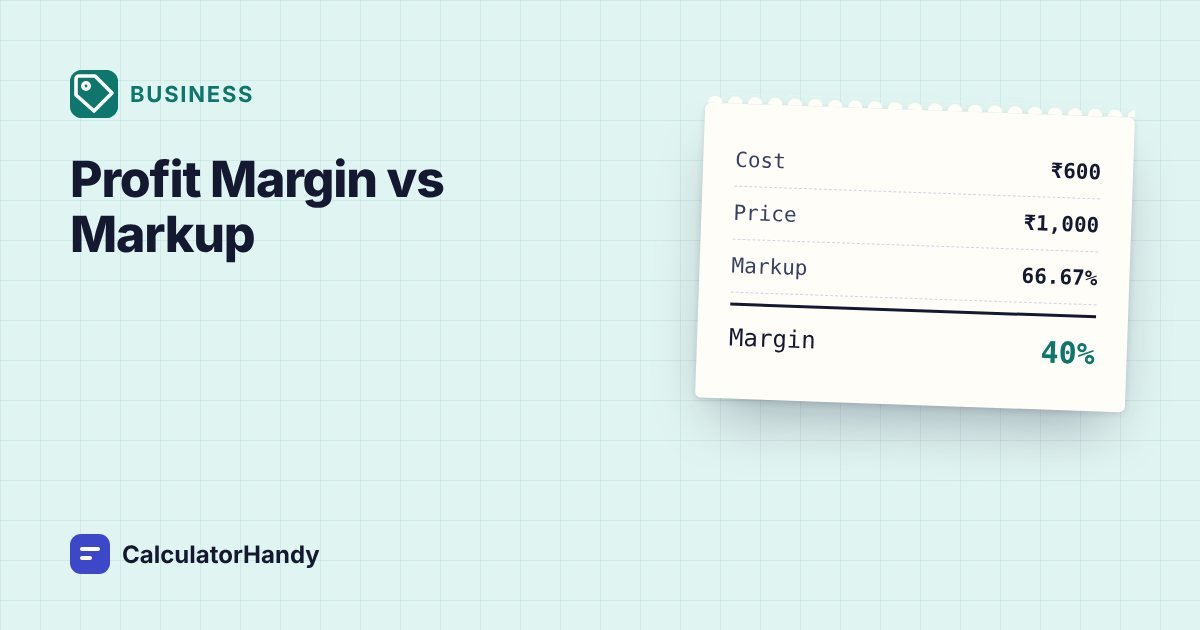
You buy a product for ₹600 and sell it for ₹1,000. Profit is ₹400.
- Markup = 400 ÷ 600 = 66.67%
- Margin = 400 ÷ 1,000 = 40%
Both describe the same sale. If you planned for a 40% margin but priced with a 40% markup, you would sell at ₹840 instead of ₹1,000, and your margin would only be 28.6%.
Conversion table
| Markup | Margin |
|---|---|
| 25% | 20% |
| 33.3% | 25% |
| 50% | 33.3% |
| 66.7% | 40% |
| 100% | 50% |
| 150% | 60% |
The formulas behind it: margin = markup ÷ (1 + markup), and markup = margin ÷ (1 − margin), with both as decimals.
Setting a price from a target margin
If you know the margin you want, divide cost by (1 − margin):
Price = cost ÷ (1 − target margin)
For a ₹600 product and a 40% margin: 600 ÷ 0.6 = ₹1,000.
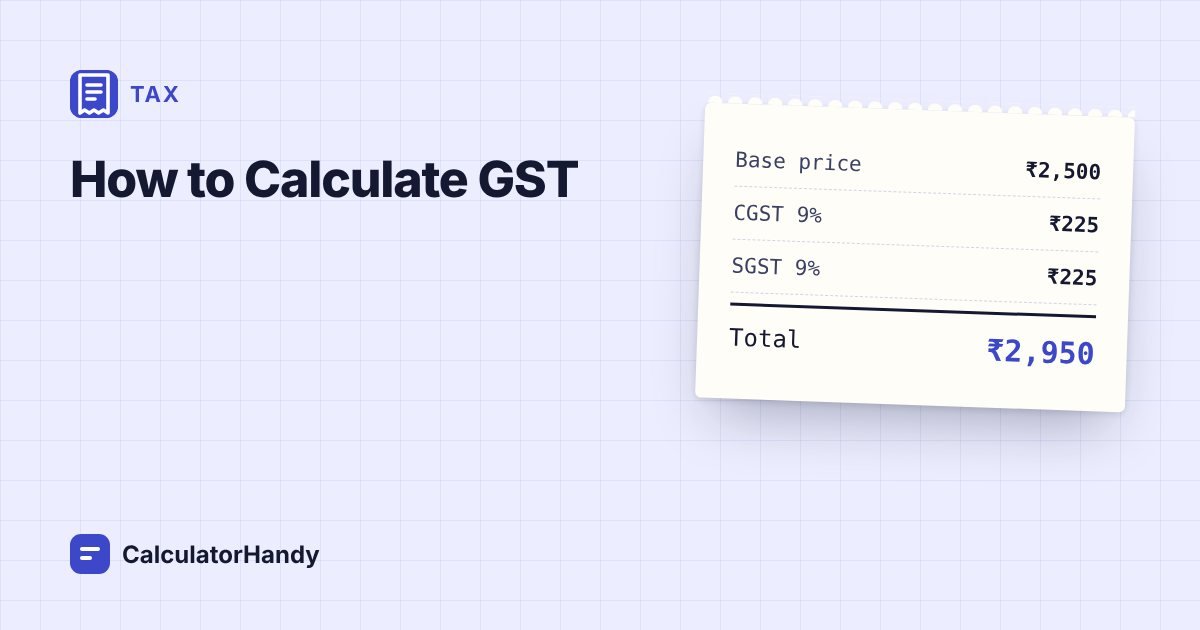
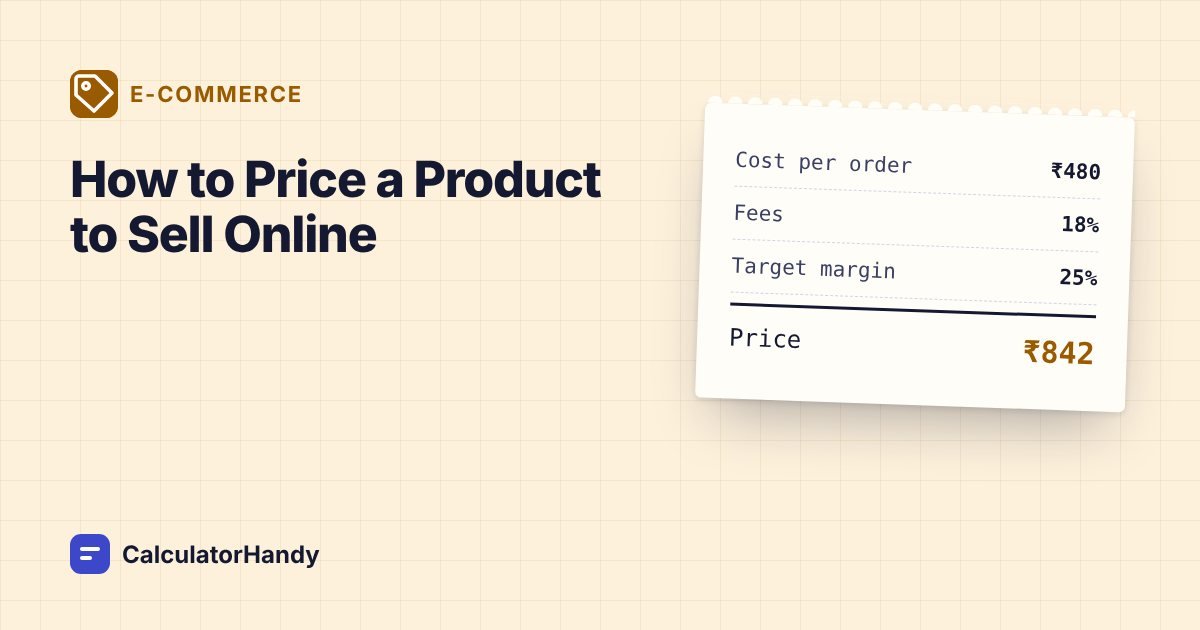
Online sellers need one more step, because marketplace and payment fees are taken as a percentage of the selling price. With a ₹400 product, ₹60 shipping and ₹20 packaging, 18% total fees and a 25% target margin, the price is 480 ÷ (1 − 0.18 − 0.25) ≈ ₹842. The Product Pricing Calculator handles this automatically.
Why margins shrink when you give discounts
A 10% discount on a ₹1,000 product with a ₹600 cost cuts your price to ₹900 but your profit from ₹400 to ₹300: a 25% drop in profit. To earn the same total profit at the lower price, you would need to sell a third more units. That is the hidden cost of frequent sales, and it is worth checking with the Discount Calculator before running one.
Gross margin vs net margin
Everything above is gross margin: price minus the direct cost of the product. Net margin also subtracts rent, salaries, marketing and other overheads. A business can have a healthy 40% gross margin and still lose money if overheads take 45% of revenue.
Which one should you use?
- Use margin to judge profitability and compare with industry benchmarks, because accounts and investors talk in margins.
- Use markup as a quick pricing rule on the shop floor, as long as you know what margin it produces.
- Always state which one you mean when talking to suppliers, partners or staff.
Then check how many units you must sell to cover fixed costs with the Break-Even Calculator.
Frequently asked questions
Can markup be more than 100%?
Yes. Markup has no upper limit: selling something that cost ₹100 for ₹300 is a 200% markup. Margin can never reach 100%, because that would mean the product cost nothing.
Which is better for pricing, margin or markup?
Both work if used correctly. Margin is easier to compare with business targets; markup is quick to apply to cost. Problems start when one is mistaken for the other.
How do I convert markup to margin?
Divide markup by (1 + markup), with markup as a decimal. A 50% markup is 0.5 ÷ 1.5 = 33.3% margin.